The Future of Recruitment: AI Resume Screening, Candidate Scoring and AI Interviews
Discover how AI recruitment software streamlines hiring with resume parsing, candidate scoring matrices, and structured AI interviews. Try HR Suite free.
The Future of Recruitment: AI Resume Screening, Candidate Scoring and AI Interviews
Talent acquisition teams face a persistent operational paradox: posting an open role yields hundreds of inbound applications within hours, yet identifying qualified candidates takes longer than ever. Recruiters spend an estimated 15 to 25 hours per week manually reviewing resumes, coordinating schedules, and sifting through mismatched profiles. When hiring teams rely on manual evaluation or legacy applicant tracking systems, cognitive fatigue sets in, unconscious bias creeps into shortlisting, and high-caliber candidates slip through operational cracks.
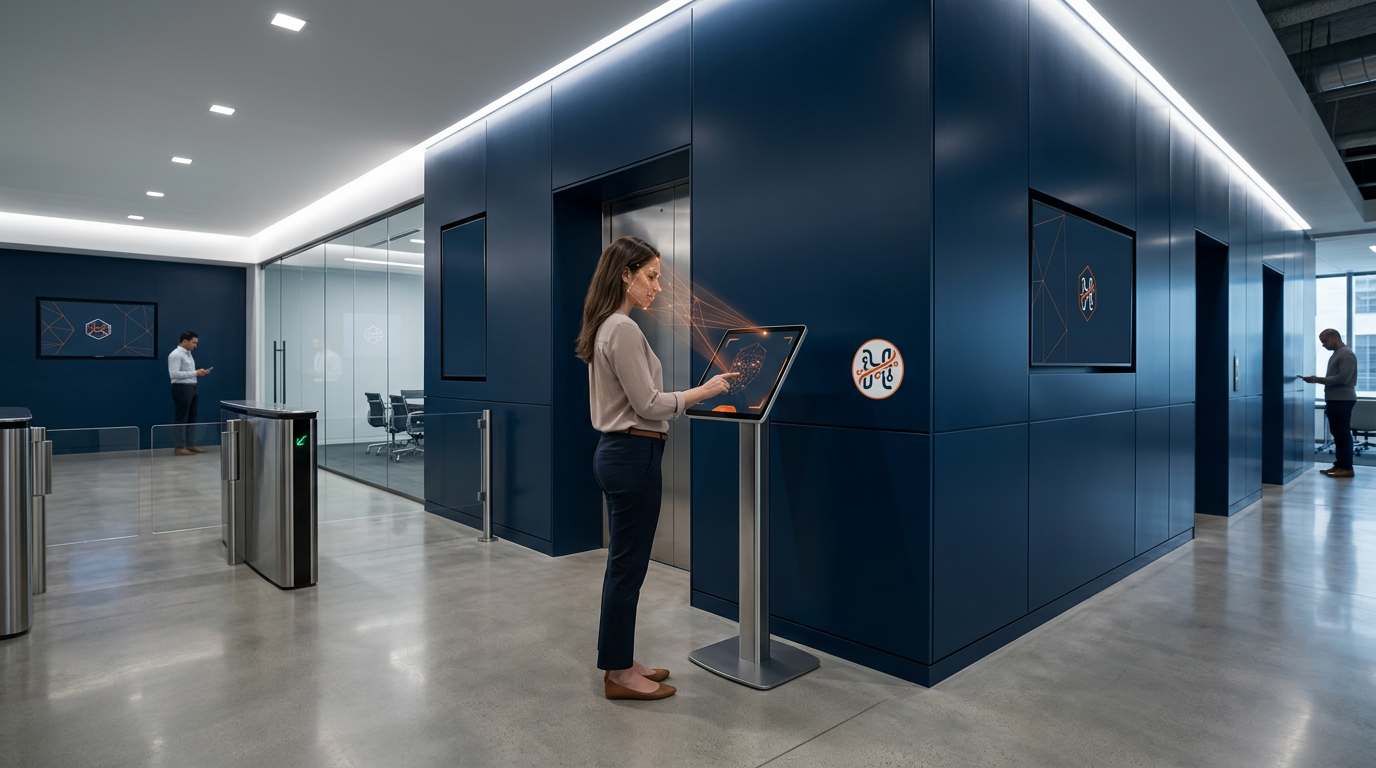
To solve this bottleneck, high-growth organizations are turning to AI recruitment software that replaces brute-force administration with intelligent automation. Rather than treating recruitment as a reactive filing exercise, modern platforms weave natural language processing (NLP), multi-variable scoring models, and structured interview support directly into the hiring workflow.
Platforms like HR Suite by Smart Chain integrate these predictive hiring capabilities directly into an all-in-one HRMS architecture—unifying hiring, onboarding, payroll, and core employee records in a single ecosystem.
The Evolution of Talent Acquisition: Why Legacy ATS Platforms Fall Short
Traditional Applicant Tracking Systems (ATS) were built to solve a 1990s problem: digitizing paper resumes into a searchable repository. However, basic digital storage does not equal intelligence.
Legacy platforms typically rely on rigid, keyword-based search filters. If a candidate lists "people operations" instead of "HR management," a legacy ATS will often discard the profile outright. Conversely, candidates who "game" the system by keyword-stuffing their CVs rise to the top, regardless of real-world competency.
This approach introduces major operational liabilities:
- False Negatives: Capable candidates with non-standard formatting or alternative job titles get filtered out.
- Administrative Drag: Recruiters still have to read through dozens of mediocre CVs that passed keyword filters.
- Fragmented Data: Once a candidate is hired in a standalone ATS, their profile data must be manually re-entered into attendance, payroll, and document management systems.
Modern AI recruitment software addresses these structural flaws by evaluating context, intent, and historical skill equivalence rather than relying on exact word matches.
AI Resume Screening and Contextual Parsing: Beyond Boolean Keywords
At the core of modern recruitment automation is deep resume parsing driven by natural language processing. Unlike basic regex-based parsers, advanced machine learning models extract semantic relationships from unstructured text.
How Contextual Parsing Operates
- Entity Extraction: The engine identifies contact details, educational degrees, certifications, companies, job titles, and tenures across non-standard layout templates (PDFs, images, multi-column designs).
- Skill Normalization: The system reconciles disparate descriptions into a standardized skill taxonomy (e.g., recognizing that "GCP," "AWS," and "Azure" represent core cloud computing capabilities).
- Career Trajectory Analysis: Instead of treating experience as a flat list, the AI maps progression, identifying promotions, role transitions, and technical depth over time.
According to research from the Society for Human Resource Management (SHRM), automated talent screening significantly reduces time-to-fill metrics while minimizing administrative friction. By delegating high-volume sorting to machine-learning models, HR teams can redirect their time toward candidate engagement and strategic assessment.
Engineering Objectivity: The Candidate Scoring Matrix
Automated screening is only as effective as the underlying rubric. To prevent arbitrary filtering, forward-thinking organizations apply a dynamic candidate scoring matrix within their recruitment workflow.
A scoring matrix assigns proportional weights to specific criteria defined during the requisition phase. Rather than returning a binary "yes/no" output, the platform calculates a normalized match score (e.g., 0–100%) based on explicit requirements.
Core Pillars of an Objective Scoring Matrix
- Hard Requirements (Gatekeepers): Mandatory licenses, language proficiencies, or regional compliance prerequisites (such as specific work authorizations or certifications).
- Functional Competencies: Direct exposure to tools, technical architectures, or domain-specific workflows.
- Experience Depth & Stability: Duration in relevant roles, balanced against indicators of growth and project scope.
- Soft Skills & Cultural Alignment: Signals extracted from project descriptions, leadership roles, and collaborative achievements.
AI Interview Assistance: Structured Evaluations at Scale
Once a shortlist is finalized, the evaluation shifts from background verification to active assessment. However, interviews are notoriously vulnerable to interviewer bias, inconsistent questioning, and subjective gut-feel scoring.
AI recruitment software elevates the interview stage through two primary operational mechanisms: predictive question generation and asynchronous interview analysis.
1. Tailored Question Generation
Standardized question banks often fail to address specific ambiguities in a candidate's work history. An AI-assisted engine analyzes the gap between the candidate’s parsed resume and the job description, automatically generating targeted, behavioral interview prompts for the hiring manager.
"The candidate has five years of enterprise sales experience but transitioned from mid-market to enterprise 10 months ago. Recommended question: Describe a multi-stakeholder enterprise deal you led from prospecting through procurement, specifically detailing how you navigated long sales cycles."
2. Structured Assessment Frameworks
During or immediately following an interview, AI tooling assists interviewers by aligning candidate responses against standardized rubrics. Instead of vague post-interview notes, interviewers complete structured scorecards evaluating specific competencies against established benchmark criteria.
As highlighted in findings from the Harvard Business Review, structured interviews that use standardized scoring are among the most reliable predictors of subsequent job performance, drastically reducing the variability of subjective human ratings.
The Unified Pipeline: From Requisition to Onboarding
Recruitment does not end with a signed offer letter. When hiring operates as an isolated department, newly hired employees enter a limbo of disjointed emails, manual paperwork submission, and delayed provisioning.
In HR Suite, the recruitment pipeline acts as the direct launchpad for the entire employee lifecycle:
When a candidate accepts an offer in HR Suite:
- Parsed identification documents (such as passports, national IDs, and tax forms) flow directly into the HR Suite Document Management system.
- The compensation structure established during requisition automatically populates the payroll module, ensuring seamless wage processing and local compliance.
- The new hire receives self-service login credentials to access company policies, submit leave requests, and track attendance on their first day.
For companies operating across multiple jurisdictions—including the UAE, Saudi Arabia, Egypt, the UK, the US, and India—HR Suite's multi-country architecture ensures that hiring workflows adhere to localized labor requirements, from probation timelines to statutory documentation.
Ethical AI and Human-in-the-Loop Governance
A critical requirement for deploying AI in talent acquisition is ethical governance. AI is designed to assist and accelerate decision-making, not replace human judgment. Autonomous hiring decisions introduce regulatory and cultural risks.
Effective implementation requires three non-negotiable principles:
- Explainability: Scoring matrices must display the exact breakdown of why a candidate received an 85% match.
- Human-in-the-Loop: Final shortlisting, interview selections, and hiring decisions must remain in the hands of human hiring managers and People Ops teams.
- Data Privacy & Regional Compliance: Candidate resumes contain sensitive personally identifiable information (PII). Software must handle candidate data in compliance with international privacy frameworks and local data residency standards.
Streamline Your Hiring with HR Suite
Talent acquisition is shifting from administrative paper-pushing to high-impact workforce engineering. Organizations that continue to rely on manual CV screening and disconnected spreadsheets face prolonged hiring cycles, higher recruitment costs, and inconsistent hiring quality.
Deploying AI recruitment software as part of a unified HRMS platform enables your People Operations team to pinpoint the best talent quickly, standardize evaluation rubrics, and deliver an exceptional candidate experience.
Experience how HR Suite by Smart Chain combines AI-powered recruitment, automated attendance, payroll, and end-to-end workforce management in one intuitive platform.
Start your 14-day free trial today to modernize your recruitment pipeline, or explore our comprehensive features and flexible pricing.
Ready to eliminate recruitment bottlenecks and hire top talent faster? Start your 14-day free trial of HR Suite by Smart Chain today and experience intelligent resume screening, scoring, and workflow automation.
Frequently asked questions
What is AI recruitment software and how does it work?
AI recruitment software uses machine learning and natural language processing (NLP) to automate high-volume hiring workflows. It parses resumes to extract skills and career progression, ranks candidates against a customized scoring matrix, and assists interviewers with tailored questions and structured scorecards.
Does AI resume screening replace human hiring managers?
No. Modern AI recruitment platforms operate on a 'human-in-the-loop' model. The AI handles data extraction, deduplication, and initial ranking based on objective criteria, but human recruiters and hiring managers make all final shortlisting and hiring decisions.
How does HR Suite integrate recruitment with core HR operations?
HR Suite by Smart Chain connects talent acquisition directly to employee lifecycle management. Once an applicant is hired, their parsed documents, salary configuration, and personal details automatically transfer into the HRMS database, initializing payroll, document tracking, and self-service access without manual data entry.
Can AI recruitment tools evaluate candidates across multi-country entities?
Yes. HR Suite supports multi-company and multi-country hiring workflows, allowing organizations to tailor requisition criteria, compliance requirements (such as work permits in the UAE or KSA), and localized employment contracts per region.