Employee Self-Service Portals: Benefits for HR Teams and Employees
Discover how an employee self-service portal streamlines leave, attendance, payslips, and documents while cutting routine administrative work for HR teams.
Employee Self-Service Portals: Benefits for HR Teams and Employees
Routine inquiries consume an astonishing amount of human resources capacity. When workers must email HR to check their remaining vacation days, request a copy of last month's payslip, or ask for an employment verification letter, administrative backlogs mount quickly. For growing businesses, these minor interactions create an operational bottleneck that stalls strategic initiatives.
An employee self-service portal solves this friction by providing a centralized digital gateway where workers manage their personal records, view essential employment data, and initiate everyday requests independently.
Modern platforms such as HR Suite by Smart Chain integrate self-service functionality directly into a broader AI-native HR management system. This architecture ensures that when an employee updates information or submits a request, it automatically synchronizes with attendance tracking, payroll, compliance, and performance records.
Here is an in-depth breakdown of how modern self-service portals function, what features they provide, and how they benefit both people operations teams and the workforces they support.
What Is an Employee Self-Service Portal?
An employee self-service portal is an interactive web and mobile workspace that gives workers direct access to their HR records, administrative tasks, and workplace communications. Rather than treating HR as a gatekeeper for basic operational data, self-service shifts data retrieval and routine transactions into the hands of the individual.
Historically, legacy intranets acted as static document repositories—little more than online bulletin boards with downloadable PDF forms. In contrast, modern self-service modules within HR Suite features serve as dynamic transaction engines. When an employee applies for annual leave or clocks in on a mobile device, the system verifies business rules, checks for scheduling conflicts, alerts direct managers for approval, and updates payroll calculations without manual intervention.
Core Capabilities: What Employees Can Access in a Modern Portal
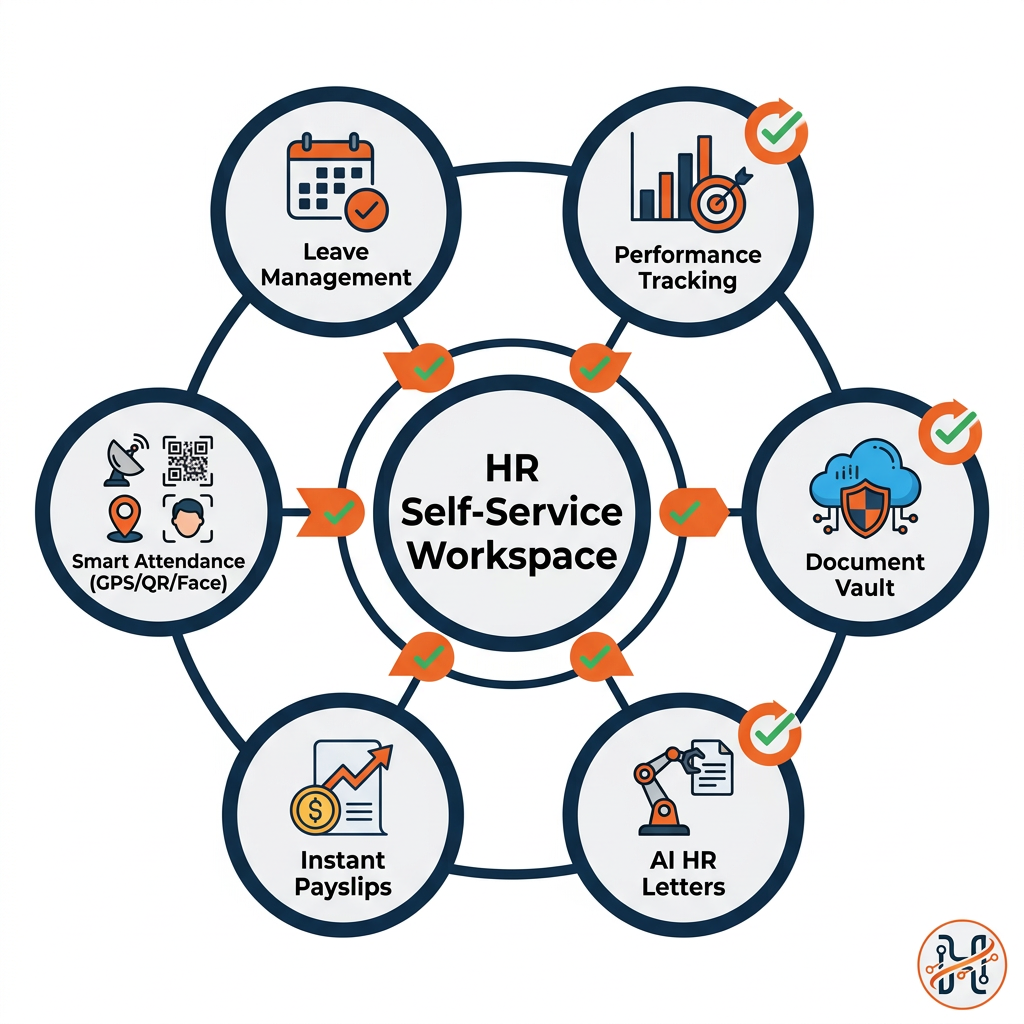
To drive high adoption, an employee self-service portal must act as a single point of interaction throughout the employee lifecycle. In HR Suite, this workspace unifies seven essential operational areas:
1. Leave and Absence Management
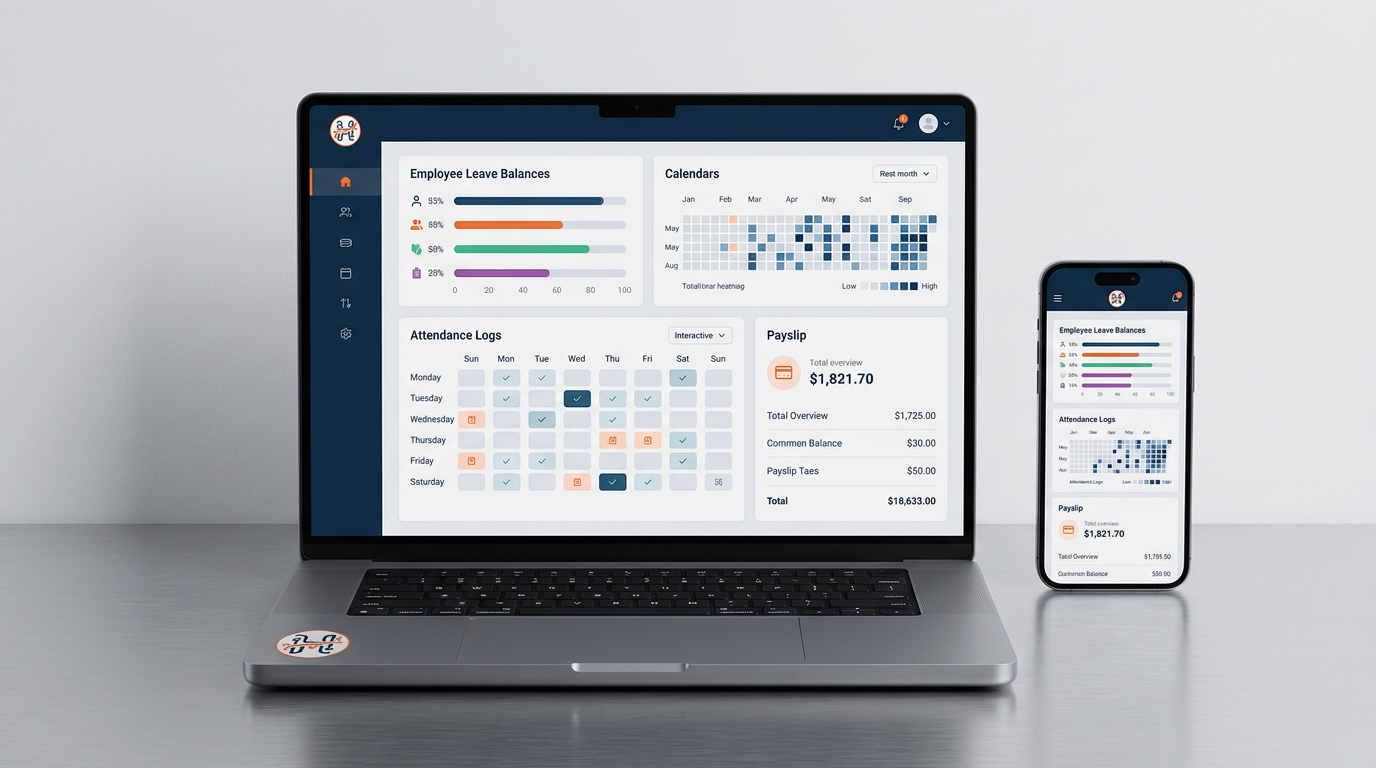
Instead of submitting paper forms or informal chat messages, employees review their accrued leave balances in real time. The portal details annual leave, sick leave, compassionate leave, and regional holidays. Workers submit absence requests, upload required medical notes, and monitor the approval status. Built-in conflict detection helps teams avoid short-staffed shifts before approvals are granted.
2. Attendance, Clock-ins, and Timesheets
Modern work environments include desk-based employees, remote staff, and mobile field workers. An advanced portal allows staff to log attendance through multiple integrated methods, including:
- Web-based desktop clock-in
- QR code scanning at job sites
- GPS-verified mobile check-ins with anti-spoofing controls
- Facial recognition terminals linked directly to user profiles
Workers can examine their logged hours, flag missed punches, and review overtime records directly, reducing month-end attendance disputes.
3. On-Demand Payslips and Compensation Records
Payroll day often brings an influx of requests to the finance department. Through the self-service workspace, employees securely view and download current and historical payslips. The system breaks down base salary components, variable allowances, tax or social insurance deductions, and year-to-date totals. For regional operations in the GCC, it also offers clarity on statutory end-of-service accruals.
4. Centralized Document Hub & Automated HR Letters
Employees frequently require official paperwork for banking, visa processing, or rental agreements. Within the portal, workers can:
- Access securely stored copies of national IDs, passports, labor contracts, and certifications.
- Monitor expiry dates on personal credentials and submit updated renewals.
- Request standardized HR letters (such as salary certificates or no-objection certificates) that are drafted automatically using AI-assisted workflow templates, reducing turnaround times from days to seconds.
5. Performance Reviews and Continuous Feedback
Performance management works best when integrated into everyday operations rather than relegated to an annual administrative exercise. Through the self-service hub, employees complete self-assessments, view manager feedback, track individual KPIs, and schedule structured one-on-one check-ins.
6. Company Notifications and Internal Mobility
Rather than letting key announcements get lost in crowded email inboxes, portals feature dedicated notification streams. Employees stay informed about company-wide updates, policy revisions, and holiday schedules. They can also review internal job openings, submit direct applications, or refer external candidates.
Practical Differences: Traditional HR vs. Self-Service Systems
| Operational Task | Traditional HR Administration | Modern Employee Self-Service Portal |
|---|---|---|
| Vacation Requests | Paper forms, disconnected emails, manual spreadsheet checks | Real-time balance visibility, instant conflict checks, one-click manager sign-off |
| Payslip Distribution | Manual email distribution or physical paper hand-offs | Secure, password-protected self-download 24/7 |
| Attendance Tracking | Manual punch cards, fragmented timesheets, separate logs | Multi-channel clock-in (GPS, QR, Facial Recognition) synced to timesheets |
| HR Letter Issuance | Manual template editing, physical signatures, 3–5 day turnaround | Automated HR letter generation with pre-approved parameters |
| Document Updates | HR chases staff for passport/visa renewals via email | Automated reminders to employee portal with direct document upload |
Key Benefits for HR Teams and Operations Leaders
Implementing an employee self-service portal delivers structural improvements to internal operations:
Drastic Reduction in Repetitive Administration
Industry analyses by organizations like the Chartered Institute of Personnel and Development (CIPD) consistently demonstrate that HR professionals spend substantial working hours on transactional administration. Automating basic queries deflects routine support tickets, allowing HR teams to focus on talent development, workforce planning, and organizational culture.
Improved Data Accuracy and Compliance
When employees input and verify their own personal details—such as home addresses, emergency contacts, and banking info—clerical errors from manual data entry disappear. Furthermore, automated document tracking ensures that critical identity cards, work permits, and visas are updated prior to expiration, protecting businesses operating across multi-country jurisdictions like the UAE, Saudi Arabia, and beyond.
Real-Time Workforce Visibility
Because attendance and leave data flow directly through the portal into the core HRMS, operations managers gain immediate operational awareness. Platforms with integrated analytics—such as HR Suite's Company Health Monitor—turn raw transactional data into actionable operational statuses, flagging high absenteeism rates or pending sign-offs before they disrupt operations.
Key Benefits for the Workforce
Employee expectations around enterprise software have changed. Workers accustomed to streamlined consumer applications expect the same convenience from workplace tools.
- Autonomy and Immediacy: Employees no longer wait for office hours or HR availability to obtain simple answers. Whether checking leave balances late at night or reviewing a payslip on a mobile device, information is available on demand.
- Transparency and Trust: Providing clear visibility into attendance logs, overtime calculations, and leave deductions reduces friction between workers and management. When compensation and attendance records are transparent, workplace trust increases.
- Streamlined Manager-Employee Workflows: Middle managers can approve time off, review shift swaps, and sign off on timesheets in seconds via clear notifications, removing administrative friction between leadership and front-line teams.
Implementing Self-Service with HR Suite
Rolling out self-service technology should simplify workplace management, not add technical overhead. HR Suite provides an intuitive, AI-native environment that combines core employee records, smart attendance (including facial recognition and GPS geofencing), automated payroll processing, and self-service access within a single architecture.
Designed to support businesses operating locally or across international borders, HR Suite handles multi-company structures and region-specific compliance rules—ranging from UAE Wage Protection System (WPS) processing to localized leave frameworks across the GCC and Europe. Check our pricing options to find the deployment structure suited to your organization's scale.
Conclusion
An employee self-service portal is no longer a luxury reserved for massive enterprises; it is a baseline operational requirement for any organization scaling beyond spreadsheets. By enabling team members to manage their leave, attendance, payslips, and credentials independently, organizations eliminate unnecessary administrative work, maintain tighter compliance, and deliver an elevated employee experience.
Ready to eliminate administrative drag and modernize your people operations? Contact our team to book a tailored walkthrough, or start your 14-day free trial of HR Suite today.
Transform how your organization manages everyday HR. Start your 14-day free trial of HR Suite by Smart Chain and experience seamless employee self-service.
Frequently asked questions
Can field and deskless workers use an employee self-service portal?
Yes. HR Suite includes mobile-first self-service options, enabling deskless, logistics, retail, and field staff to clock in using GPS geofencing or QR codes, check payslips, and submit leave requests directly from their smartphones.
How does an employee self-service portal protect sensitive salary data?
Modern platforms use strict role-based access control (RBAC), multi-factor authentication, and encrypted data transfers. Employees can only access their own payslips, contracts, and documents, preventing unauthorized internal access.
Can HR letters be issued automatically through the portal?
Yes. HR Suite features AI-assisted document and letter generation. Employees submit a request for employment certificates or salary letters, and the system populates approved templates with their verified records for swift issuance.
Does self-service sync with payroll and attendance?
Yes. When leave is approved or attendance is logged in HR Suite's self-service portal, records update synchronously with timesheets, payroll deductions, and compliance reports without requiring manual data entry.