How AI-Powered HR Software Is Transforming Modern Workforce Management
Discover how AI HR software automates recruitment, document processing, attendance, and compliance to modernize workforce management across teams.
How AI-Powered HR Software Is Transforming Modern Workforce Management
For growing businesses, managing people often degenerates into managing paperwork. What begins as a straightforward spreadsheet for tracking time off and contact details quickly fragments into isolated silos: disparate systems for biometric clocks, standalone applicant tracking software, disconnected payroll sheets, and shared folders packed with untracked document expirations.
Legacy human resource information systems (HRIS) digitized these paper records, but they stopped short of resolving operational friction. Modern organizations with distributed, field-based, or multi-country teams require more than passive digital file cabinets. They need an active intelligence layer capable of handling repetitive administration, interpreting unstructured data, and standardizing decisions across regions.
Adopting modern AI HR software marks the transition from manual, reactive human resources administration to continuous, data-driven workforce orchestration.
Moving Beyond Digitization: What Defines True AI HR Software?
Traditional HR platforms function as transactional databases. When an employee requests leave, an administrator manually reviews schedules, approves the request, logs the balance, and notifies payroll.
In contrast, modern AI HR software acts as an operational copilot. Instead of merely storing data, it evaluates inputs, flags anomalies, generates drafts, and orchestrates workflows across the entire employee lifecycle.
Key capabilities of an AI-native platform include:
- Unstructured Data Extraction: Parsing varied CV formats, passport scans, and national IDs to populate employee profiles without manual entry.
- Natural Language Generation: Instantly drafting localized employment contracts, warning notices, and verification letters tailored to organizational policy.
- Predictive Risk Surfacing: Identifying scheduling conflicts, impending document lapses, and high-turnover risks before operational bottlenecks occur.
- Context-Aware Workflows: Routing approvals dynamically based on compliance rules, project requirements, and departmental thresholds.
According to research from Gartner, over half of HR leaders are actively exploring or deploying artificial intelligence to drive efficiency and optimize talent management workflows. Platforms like HR Suite by Smart Chain integrate these predictive and generative capabilities directly into daily routines, eliminating administrative drag while maintaining full human oversight.
4 Core Workflows Transformed by AI in Modern HR Operations
Applying practical automation to routine HR tasks frees people operations teams to focus on strategic organizational goals. Below is how intelligent automation reshapes day-to-day workforce management.
1. High-Velocity Recruitment and Resume Intelligence
High-volume hiring frequently creates administrative gridlock. Recruiters often sift through hundreds of unqualified resumes for a single opening, creating candidate fatigue and prolonging time-to-fill.
AI recruitment engines streamline this pipeline from intake to offer:
- Automated Parsing and Extraction: The platform reads incoming CVs across multiple file formats, standardizing experience, certifications, and technical proficiencies.
- Contextual Candidate Scoring: Rather than depending on rudimentary keyword matching that can be gamed, the system measures candidate experience against comprehensive job requisitions to generate ranked shortlists.
- Structured Interview Frameworks: The engine assists hiring managers by generating tailored, competency-based interview questions based on each candidate's specific background and any identified resume gaps.
By condensing top-of-funnel screening from days into seconds, recruitment teams preserve their bandwidth for in-depth evaluations and relationship building.
2. Multi-Modal Attendance and Fraud-Resistant Time Tracking
Tracking attendance accurately across hybrid offices, retail fronts, logistics hubs, and remote worksites requires flexibility without compromising integrity. Traditional punch cards and fixed biometric readers fail field teams and invite time theft such as "buddy punching."
Modern workforce management software pairs centralized scheduling with multi-modal check-ins:
- Facial Recognition with Anti-Spoofing: Verifies employee identities in real time on mobile devices or shared terminals, preventing static photo verification fraud.
- Dynamic QR Codes & Geofencing: Employs time-sensitive QR check-ins and GPS boundaries to confirm employees are on site before their shift begins.
- Automated Exception Logging: Flags late arrivals, early departures, and unapproved overtime automatically, syncing reconciled hours directly with the payroll engine.
Explore how HR Suite Features bring these verified attendance streams into a single administrative console.
3. Intelligent Document Management and Automated Letter Drafting
Paperwork overhead consistently drains HR productivity. Teams spend hours compiling employment verification letters, salary certificates, and promotion announcements, while manually auditing visa and passport expiration dates.
With AI-assisted document workflows, this friction disappears:
- Document Intelligence: Scanned employee credentials—such as national IDs, medical clearances, and commercial driving licenses—are extracted, verified, and mapped to the employee profile automatically.
- Proactive Expiry Monitoring: Visual alerts trigger well before critical documents expire, giving teams ample time for renewals and avoiding regulatory fines.
- On-Demand Letter Generation: Employees can request standard letters through self-service portals. The platform pulls verified salary, title, and tenure data into legal templates, generating finalized PDFs ready for digital signature in seconds.
4. Consolidated Payroll and Regional End-of-Service Management
Processing payroll across fragmented spreadsheets leaves companies vulnerable to human calculation errors, misclassified allowances, and compliance violations.
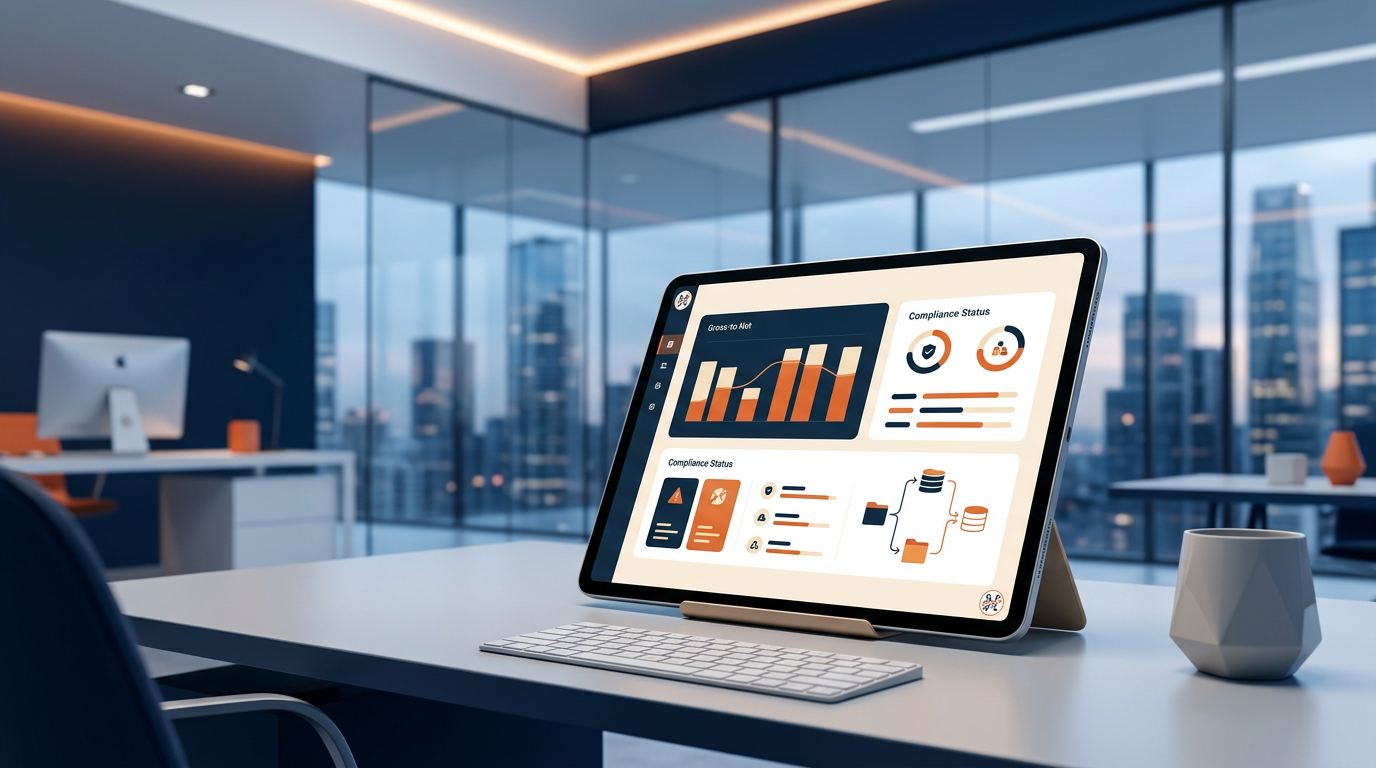
Modern HR platforms connect attendance logs, approved leaves, and deduction rules straight to the compensation engine. Whether adjusting salary components or running terminal settlements, the system computes gross-to-net allocations automatically.
For companies operating across multiple jurisdictions—such as the UAE, Saudi Arabia, Egypt, the UK, or India—the software dynamically applies localized labor standards, wage protection protocols (like UAE WPS SIF export), and complex End-of-Service (EOS) gratuity formulas without requiring external spreadsheets.
Comparison: Traditional HR Systems vs. Modern AI HR Software
| Functional Area | Traditional HRMS / Spreadsheets | Modern AI HR Software (e.g., HR Suite) |
|---|---|---|
| Candidate Screening | Manual CV review; vulnerable to bias and keyword gaming | Objective parsing, semantic qualification scoring, and ranked shortlists |
| Time & Attendance | Fixed biometric hardware or manual sign-in sheets | Facial recognition, GPS geofencing, QR check-ins, and anti-spoofing controls |
| HR Documentation | Manual Word templates; shared folders prone to missed expirations | Automated letter drafting, OCR credential extraction, and automated expiry tracking |
| Employee Service | High volume of email requests for basic balance and document checks | Comprehensive employee self-service workspace on web and mobile |
| Payroll Preparation | Manual spreadsheet reconciliation between clocks and payroll tables | Native integration of attendance, leaves, and localized compliance rules |
| Operations Visibility | Stale historical reports compiled at month-end | Real-time workforce health monitoring with automated risk indicators |
Real-Time Visibility: The Shift to Predictive Company Health Monitoring
Retrospective reporting explains why an operational failure happened last month; predictive indicators reveal what requires attention today.
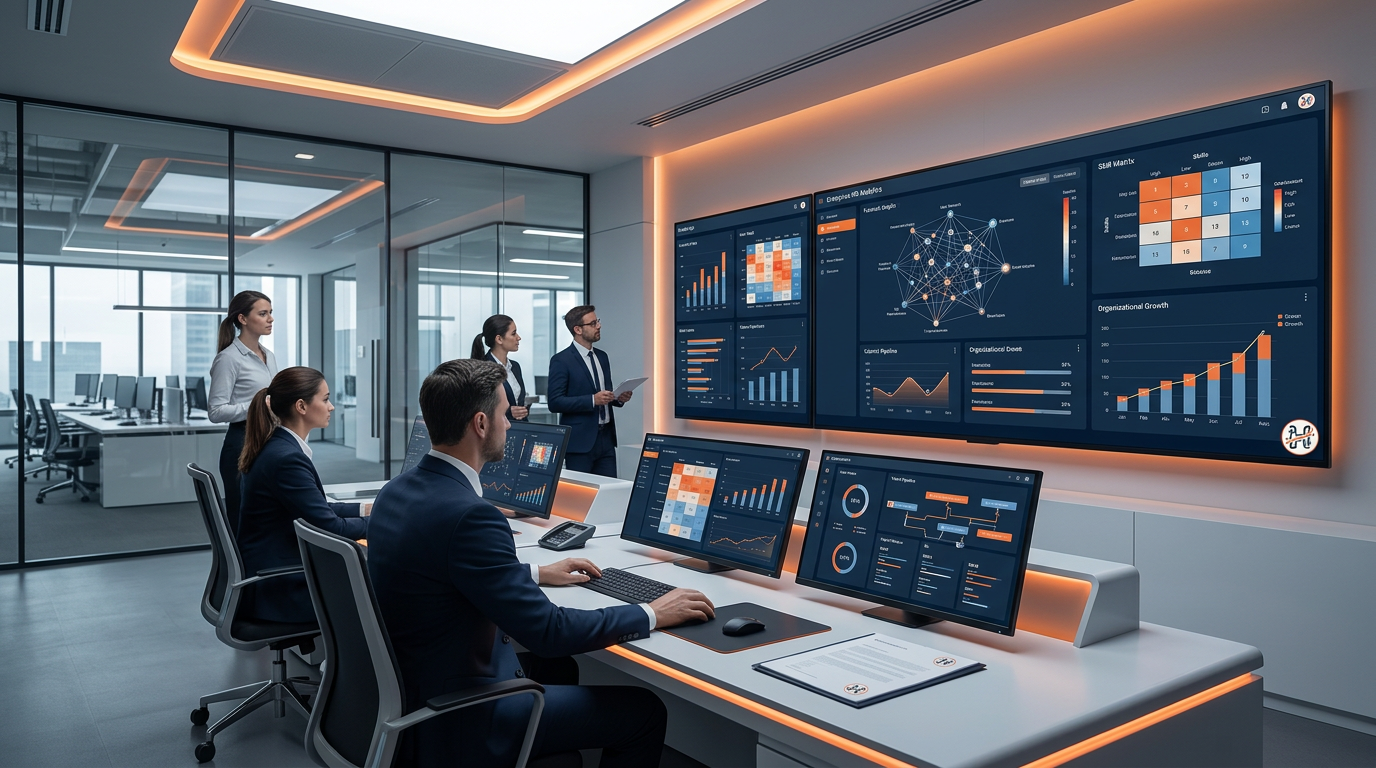
Rather than forcing management to run complex database queries, intelligent HR platforms consolidate company vitals into a visual monitoring dashboard using clear status indicators:
- 🟢 Green (Healthy): Attendance rates align with rosters, document renewals are current, and leave balances are within standard ranges.
- 🟡 Yellow (Requires Attention): Spotting anomalies such as recurring shift tardiness in a specific facility or a cluster of work visas expiring within 45 days.
- 🔴 Red (Action Required): Unreconciled attendance logs blocking payroll sign-off, or unassigned mandatory shifts threatening service-level agreements.
This visibility gives operations managers and C-suite executives immediate insight into organizational capacity without requiring manual audit requests.
Empowering the Deskless and Distributed Workforce
When employees must submit manual tickets to update contact information, verify leave balances, or request payslips, HR teams become bottlenecks. This administrative drag is particularly acute for frontline, logistics, and retail workers who lack dedicated workstations.
Intelligent platforms mitigate this through a responsive, mobile-first employee self-service (ESS) workspace. From a single login, employees can:
- Clock in and out using verified geolocation or facial recognition.
- Submit absence requests and view remaining leave entitlements with automated conflict checks.
- Download stamped payslips and tax summaries.
- Apply for internal job vacancies and track referral statuses.
- Access and update verified personal and family documents.
Shifting routine administrative tasks to self-service portals shortens request turnaround times and builds workplace transparency.
Architectural Considerations for Multi-Country Scalability
As organizations expand internationally, their HR operational complexity compounds. Local labor laws diverge significantly across vacation accruals, probationary terms, public holiday calendars, and severance calculations.
Adopting separate software tools in every country fragments organizational data, while relying on a rigid single-country system leads to non-compliance.
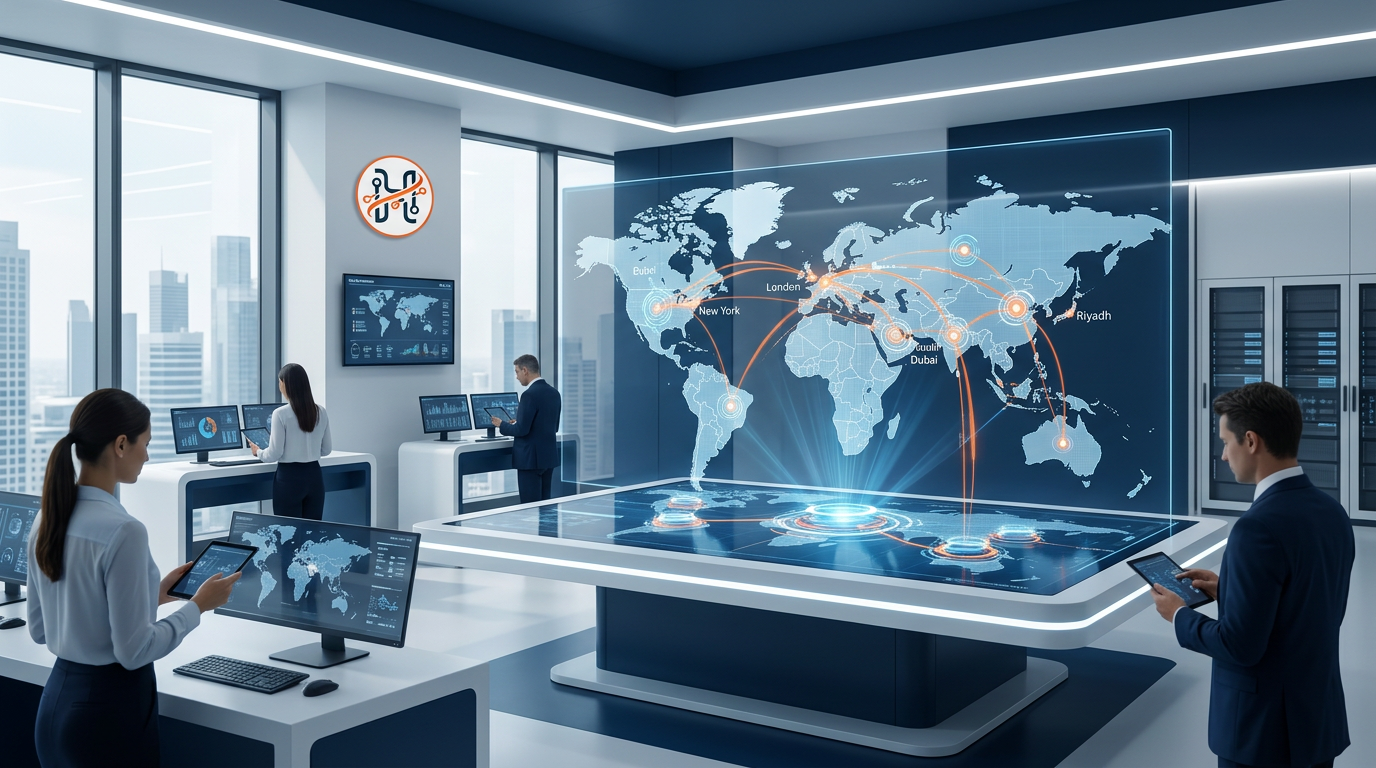
Modern platforms resolve this through a multi-company, multi-country architecture. This model allows central leadership to monitor workforce headcount, performance metrics, and salary costs across all entities, while localized packs configure workflows to match legal mandates in territories like the UAE, KSA, Egypt, India, Pakistan, the UK, and the US.
To see how scalable architecture fits your international footprint, review our transparent HR Suite Pricing.
Summary: Building an Operational Foundation for Modern Work
Artificial intelligence in HR is not about replacing human empathy or judgment; it is about eliminating administrative drag. By pairing centralized record-keeping with automated document workflows, verified biometric attendance, automated recruitment pipelines, and regional compliance rules, businesses can scale their operations without ballooning back-office overhead.
Transforming your people operations starts by retiring scattered spreadsheets in favor of a unified platform that connects your entire workforce.
Discover how HR Suite by Smart Chain unifies your employee management, attendance, payroll, and recruitment under an intelligent operational framework. Contact our team to discuss your deployment requirements or start your 14-day free trial today to experience the platform firsthand.
Modernize your workforce operations with an intelligent, all-in-one HR platform. Start your 14-day free trial of HR Suite by Smart Chain today.

Frequently asked questions
What is AI HR software?
AI HR software is an integrated workforce management platform that applies machine learning and natural language processing to automate core HR processes. Unlike basic digital databases, it actively assists with resume scoring, document parsing, facial-recognition time tracking, automated letter drafting, and predictive compliance monitoring.
Can AI replace human HR professionals?
No. Modern AI HR software serves as an operational copilot designed to eliminate administrative burden and reduce manual data entry. Human HR leaders maintain complete oversight and final authority over hiring selections, disciplinary actions, performance appraisals, and employee relations.
How does AI-powered attendance tracking prevent time theft?
Intelligent attendance systems combine live facial recognition, anti-spoofing algorithms, GPS geofencing, and rotating QR codes. These tools verify that the correct employee is physically present at the designated job site or branch, preventing buddy punching and fraudulent clock-ins.
How does multi-country compliance work in HR Suite?
HR Suite by Smart Chain features a multi-company and multi-country architecture with preconfigured compliance packs. This allows organizations to operate under jurisdiction-specific payroll rules, leave accruals, and End-of-Service calculations (such as UAE WPS SIF files and Saudi Labor Law) within one unified system.