How HR Analytics Helps Businesses Make Better Workforce Decisions
Discover how modern HR analytics software turns attendance trends, payroll summaries, and workforce metrics into actionable business decisions.
How HR Analytics Helps Businesses Make Better Workforce Decisions
Every day, organizations generate vast volumes of people data: biometric clock-ins, leave requests, shift swaps, salary adjustments, and performance check-ins. Yet, many leadership teams still make critical staffing and operational decisions based on gut feel or fragmented spreadsheets that are out of date before they are even reviewed.
Moving from reactive administrative record-keeping to proactive decision-making requires real-time visibility into how your workforce operates. Modern HR analytics software transforms disconnected data points into actionable operational intelligence. When implemented effectively, it allows HR directors, operations leaders, and C-suite executives to forecast staffing needs, curb unexplained labor costs, maintain multi-regional compliance, and protect operational continuity.
In this guide, we explore how consolidated HR dashboards, attendance trends, leave analytics, and payroll summaries empower leadership teams to make faster, higher-conviction workforce decisions.
The Shift from Static HR Reporting to Real-Time Dashboards
Traditional HR reporting is historical and cumbersome. At the close of each month or quarter, HR teams spend days pulling export files from separate systems—one for biometric attendance, another for leave approvals, a third for payroll processing, and multiple local files for regional employee documentation. By the time leadership receives these reports, the underlying operational reality has already shifted.
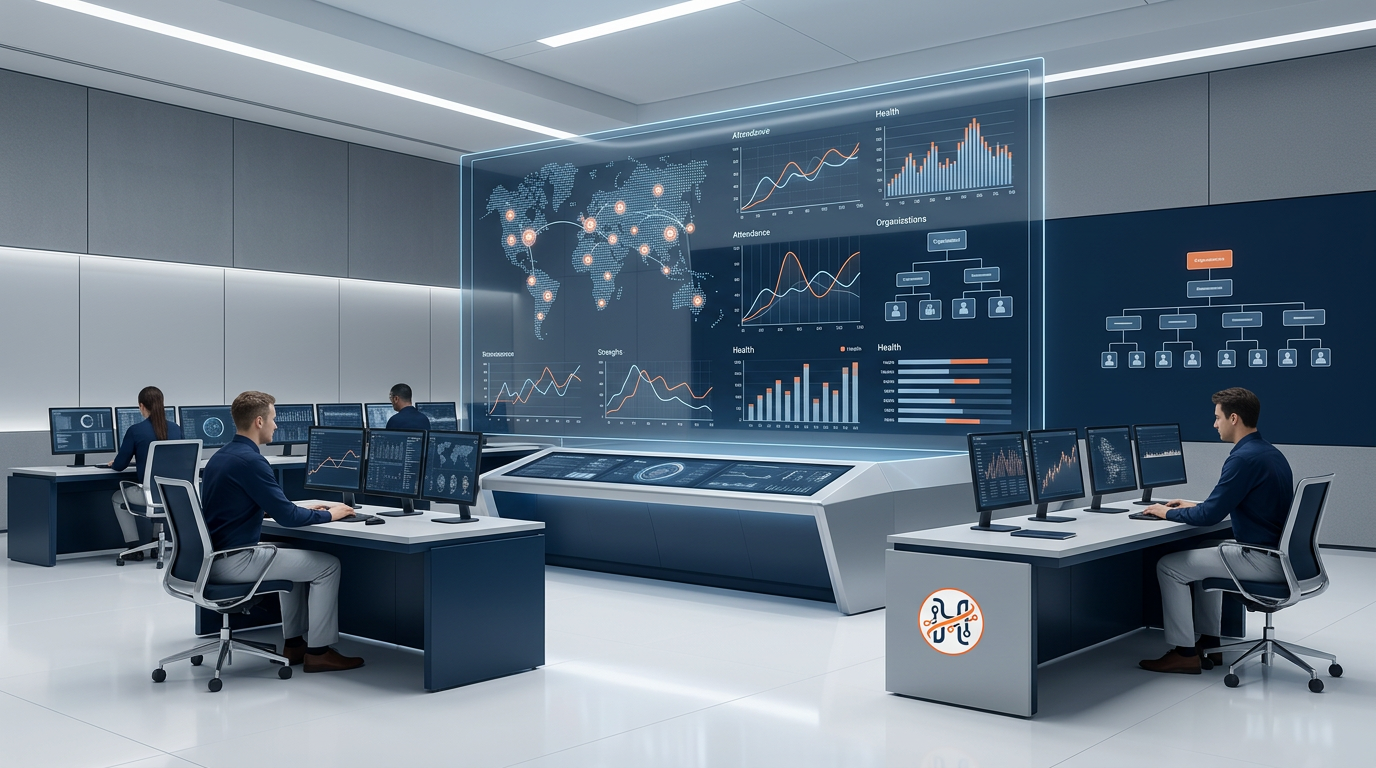
Integrated HR analytics software replaces disjointed reporting with real-time operational dashboards. Rather than looking in the rearview mirror, department heads and business owners can view current metrics on demand:
- Active Headcount vs. Capacity: Instantly see deployment across branches, sites, and regional entities.
- Daily Workforce Availability: Track present, remote, absent, and on-leave staff in a single view.
- Operational Anomalies: Spot sudden spikes in unplanned absenteeism or overtime hours before they derail project budgets.
Platforms like HR Suite by Smart Chain bridge the gap between day-to-day employee management and executive intelligence. By centralizing employee lifecycle data—from onboarding through daily attendance to payroll and eventual offboarding—an intelligent platform ensures management decisions are backed by continuous, verified data rather than end-of-month estimates.
Uncovering Operational Bottlenecks with Attendance Analytics
Attendance data is often treated as a mere compliance requirement for calculating monthly salaries. In reality, attendance data is one of the clearest windows into operational health, workforce discipline, and capacity bottlenecks.
Spotting Punctuality and Shift Patterns
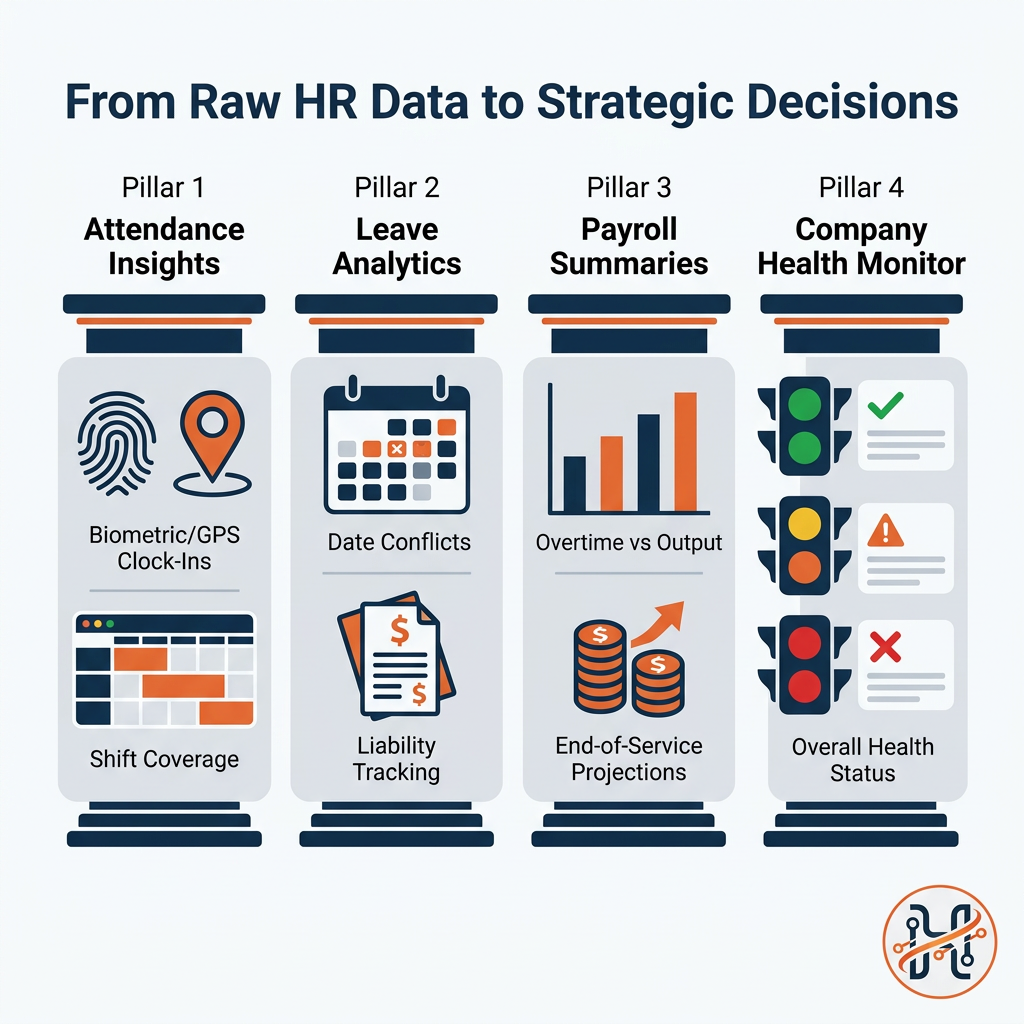
When managing distributed, field, or retail workforces, manual sign-in sheets and basic biometric clocks fail to provide context. Advanced HR Suite features capture attendance through verified methods—such as geofenced GPS, QR codes, and facial recognition—providing tamper-proof logs across every branch or worksite.
Through attendance analytics, operations leaders can identify subtle trends:
- Chronic Tardiness by Location: Is a specific retail branch or warehouse experiencing recurring late arrivals on certain shifts? This may point to local transportation bottlenecks or schedule misalignment rather than individual employee negligence.
- Shift Leakage: Identifying systemic early departures or missed punches across specific teams highlights operational friction or supervisory gaps.
- Overtime Hotspots: Excessive overtime is often assumed to indicate high productivity. In many cases, it signals understaffing, unequal workload distribution, or inefficient process handoffs that risk burnout.
Proactive Leave Analytics and Capacity Planning
Unplanned leave disrupts business continuity. When leave analytics are disconnected from operational scheduling, managers approve time off blindly, leading to staffing shortages during seasonal peaks.
Consolidated leave dashboards allow managers to:
- Detect Departmental Overlap: Identify when key personnel across interdependent roles submit concurrent leave requests.
- Forecast Seasonal Absenteeism: Analyze historical leave patterns to pre-arrange temporary staffing or shift schedules ahead of major holiday periods.
- Track Leave Balance Liabilities: Unused accrued leave represents a growing financial liability on balance sheets. Analytics give finance teams clear visibility into liability accumulation, allowing them to encourage planned leave utilization throughout the year.
Optimizing Labor Costs: Payroll Summaries and Financial Visibility
Labor typically represents an organization's single largest operational expense. Despite this, many finance and HR managers lack unified visibility into how compensation, allowances, overtime, and statutory liabilities fluctuate month over month.
Granular Cost Breakdowns
Modern HR analytics software breaks down payroll data into transparent cost drivers, giving finance directors clear oversight over:
- Base Salary vs. Variable Compensation: Tracking changes in allowances, transport costs, and performance bonuses across departments.
- Overtime vs. Output Correlation: Correlating overtime spend with actual operational output to determine whether additional temporary hiring would be more cost-effective than continuous overtime approvals.
- Cost per Department and Project: Allocating labor costs accurately across cost centers, subsidiaries, or ongoing client deliverables.
Statutory Compliance and End-of-Service Forecasting
For companies operating in regions such as the UAE or Saudi Arabia, payroll involves complex statutory calculations, such as End-of-Service (EOS) gratuity and strict compliance protocols like Wage Protection System (WPS) files. Accrued gratuity obligations compound as employees' tenures and salaries increase.
Analytics dashboards within HR Suite automate these calculations, providing continuous views of accumulated gratuity liabilities. CFOs can assess exact exit cost commitments without manual auditing, avoiding unexpected cash-flow strain when long-tenured staff depart.
Strategic Workforce Metrics Modern Platforms Track
To move beyond basic record-keeping, organizations should leverage their HR analytics software to monitor these vital workforce health indicators:
1. Retention and Turnover Velocity
Tracking overall turnover is useful, but identifying when and where employees leave provides deeper insights. Are departures concentrated within the first 90 days? That usually points to recruitment disconnects or onboarding friction. Are exits clustered in a specific department? That highlights managerial or workload challenges.
2. Time-to-Fill and Recruitment Pipeline Health
Recruiting without metrics leads to bloated agency spend and protracted hiring delays. Unified platforms combine talent acquisition with workforce metrics. Through AI recruitment tools that parse and rank resumes against job requisitions, HR leaders can evaluate candidate drop-off rates, interview-to-offer ratios, and average sourcing costs.
3. Document Expiry and Legal Compliance
Managing visas, national IDs, health cards, and operational certifications across dozens or hundreds of employees carries significant risk. According to research published by authoritative sources like the Society for Human Resource Management (SHRM), non-compliance and documentation oversights are among the most preventable drivers of organizational penalties.
HR Suite addresses this through its Company Health Monitor, which visually aggregates compliance status using an intuitive traffic-light system:
- 🟢 Green (Healthy): All employee records, compliance requirements, and documents are valid and up to date.
- 🟡 Yellow (Attention Required): Upcoming document expiries (e.g., passports, work permits) within 30 to 60 days.
- 🔴 Red (Action Required): Expired credentials, compliance breaches, or unresolved documentation issues requiring immediate intervention.
Consolidating Multi-Company and Multi-Country Insights
As organizations scale across international borders, workforce complexity multiplies. Operating across jurisdictions—such as the UAE, Saudi Arabia, Egypt, India, the UK, or the US—often forces companies to implement different local systems, blinding executive leadership to the broader organizational picture.
Unified HR analytics software bridges this divide. It enables executive teams to view aggregated metrics across the entire enterprise while allowing local branch managers to drill down into their specific legal entity, tax structures, and working schedules.
By centralizing people operations, corporate leadership can benchmark branch performance objectively, streamline regional payrolls, and ensure consistent company-wide policies without compromising local statutory adherence.
Conclusion: Turning People Data into Strategic Advantage
Your workforce is your largest operational investment and your greatest operational engine. Managing it with outdated tools, disconnected files, and historical reporting handicaps your growth and exposes your business to unnecessary risk.
By deploying dedicated HR analytics software, you equip your leadership team with the visibility required to eliminate staffing inefficiencies, anticipate turnover, streamline payroll, and safeguard regulatory compliance across every office and operating entity.
Take the guesswork out of workforce management. Discover how HR Suite by Smart Chain connects daily attendance, automated payroll, multi-country compliance, and real-time company health monitoring into a single, intuitive platform.
Ready to transform your people operations? Start your 14-day free trial or explore our pricing plans today.
Ready to modernize your workforce decisions? Start your 14-day free trial of HR Suite by Smart Chain today and experience the clarity of integrated HR analytics.
Frequently asked questions
What is HR analytics software and why is it important?
HR analytics software is a digital solution that aggregates employee data—such as attendance, payroll, leave, and performance—into actionable dashboards and reports. It helps business leaders identify workforce bottlenecks, reduce labor costs, plan hiring, and ensure statutory compliance.
How does attendance analytics improve daily business operations?
Attendance analytics tracks real-time punctuality, absenteeism, and overtime across teams, branches, and field locations. It helps managers identify understaffed shifts, reduce unauthorized overtime, and spot burnout patterns before operational efficiency suffers.
Can HR Suite handle multi-country workforce analytics and compliance?
Yes. HR Suite by Smart Chain is designed with a multi-company and multi-country architecture. It consolidates executive analytics across all your business entities while accommodating localized compliance rules, such as UAE WPS SIF files, Saudi labor guidelines, and regional end-of-service gratuity formulas.
What is the Company Health Monitor in HR Suite?
The Company Health Monitor is a visual dashboard that uses a color-coded status indicator (Green, Yellow, Red) to display workforce health, document validity, and compliance status at a glance, allowing HR teams to resolve expiring visas or attendance anomalies proactively.