Why Employee Self-Service Is Changing the Way HR Departments Work
Discover how employee self-service HR software eliminates manual requests for leave, attendance, payslips, and HR letters while boosting team productivity.

Why Employee Self-Service Is Changing the Way HR Departments Work
For decades, human resources departments have functioned as administrative intermediaries for almost every basic workplace transaction. When an employee needed a copy of their latest payslip, wanted to check their remaining annual leave balance, or required a salary certificate for a bank loan, the workflow was invariably manual: send an email, submit a paper form, or tap an HR team member on the shoulder.
This continuous stream of low-complexity, transactional inquiries creates a hidden operational drag. Instead of focusing on strategic talent planning, workforce productivity, and organizational health, HR managers spend hours acting as manual data couriers.
Modern employee self-service HR software has fundamentally altered this dynamic. By shifting routine data retrieval and standard request workflows directly to workers, businesses eliminate operational bottlenecks while giving employees faster, transparent control over their work lives. Platforms like HR Suite by Smart Chain show how embedding self-service capabilities into a unified ecosystem reshapes the daily realities of people operations.
The Administrative Bottleneck: Why Manual HR Inquiries Drain Productivity
Every manual request submitted to HR carries an administrative cost. Industry studies from organizations like the Society for Human Resource Management (SHRM) consistently demonstrate that HR teams spend a significant percentage of their working week on transactional administration rather than strategic initiatives.
Consider what happens during a standard request for an employment certificate or leave adjustment:
- The employee composes an email or message to HR.
- An HR officer acknowledges the message, navigates to the core database or spreadsheet, and verifies records.
- The data is manually transcribed into a template or approved in an isolated system.
- Management approval is sought via email chains.
- The final document or confirmation is sent back to the employee.
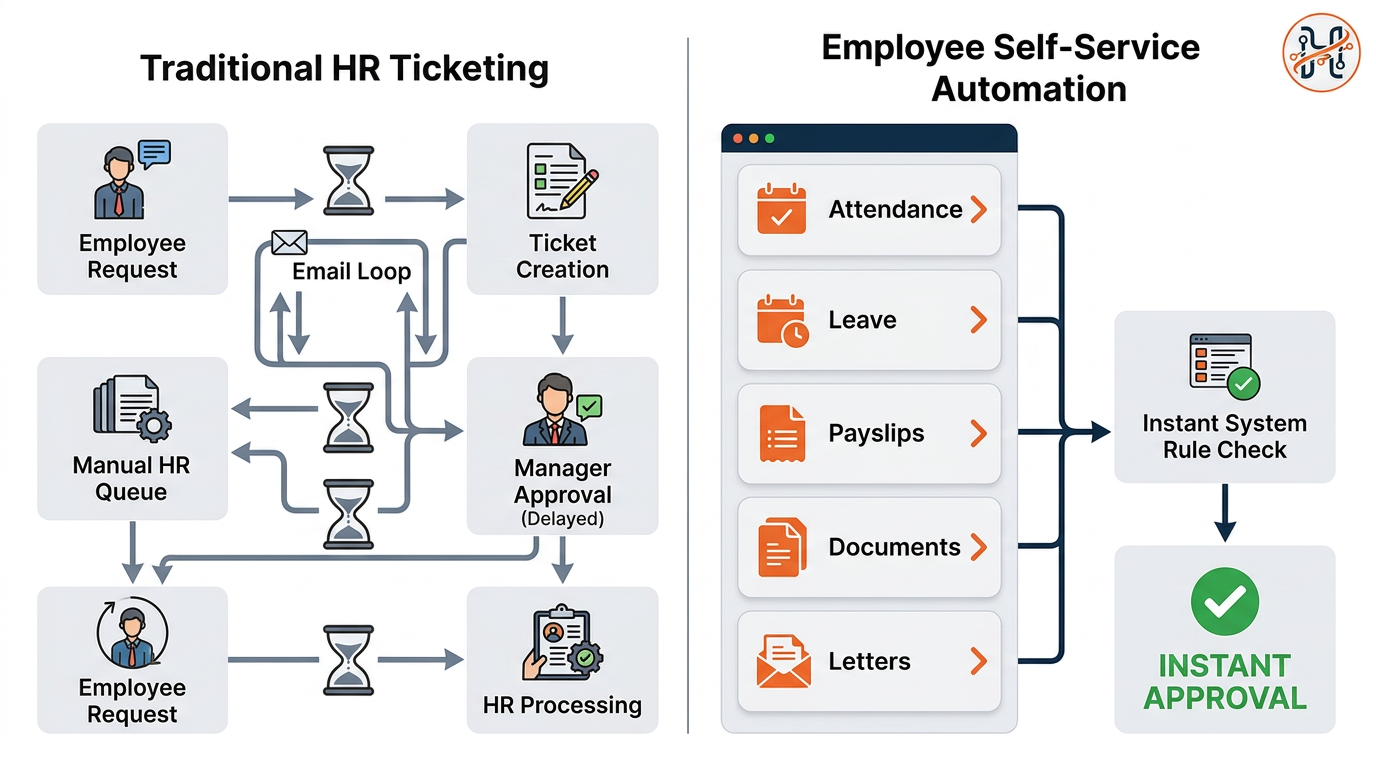
When multiplied across hundreds or thousands of staff members across distributed offices, retail branches, or field sites, this pattern collapses HR productivity. Furthermore, it introduces unnecessary latency for the employee, who may wait days for an answer that should take seconds.
Transitioning to dedicated employee self-service HR software replaces this multi-step queue with governed, automated workflows.
7 Core Workflows Transformed by Employee Self-Service
A modern employee self-service workspace acts as a centralized personal hub where workers access essential tools and records directly from their desktop or mobile browser.
1. Attendance & Clock-In Tracking
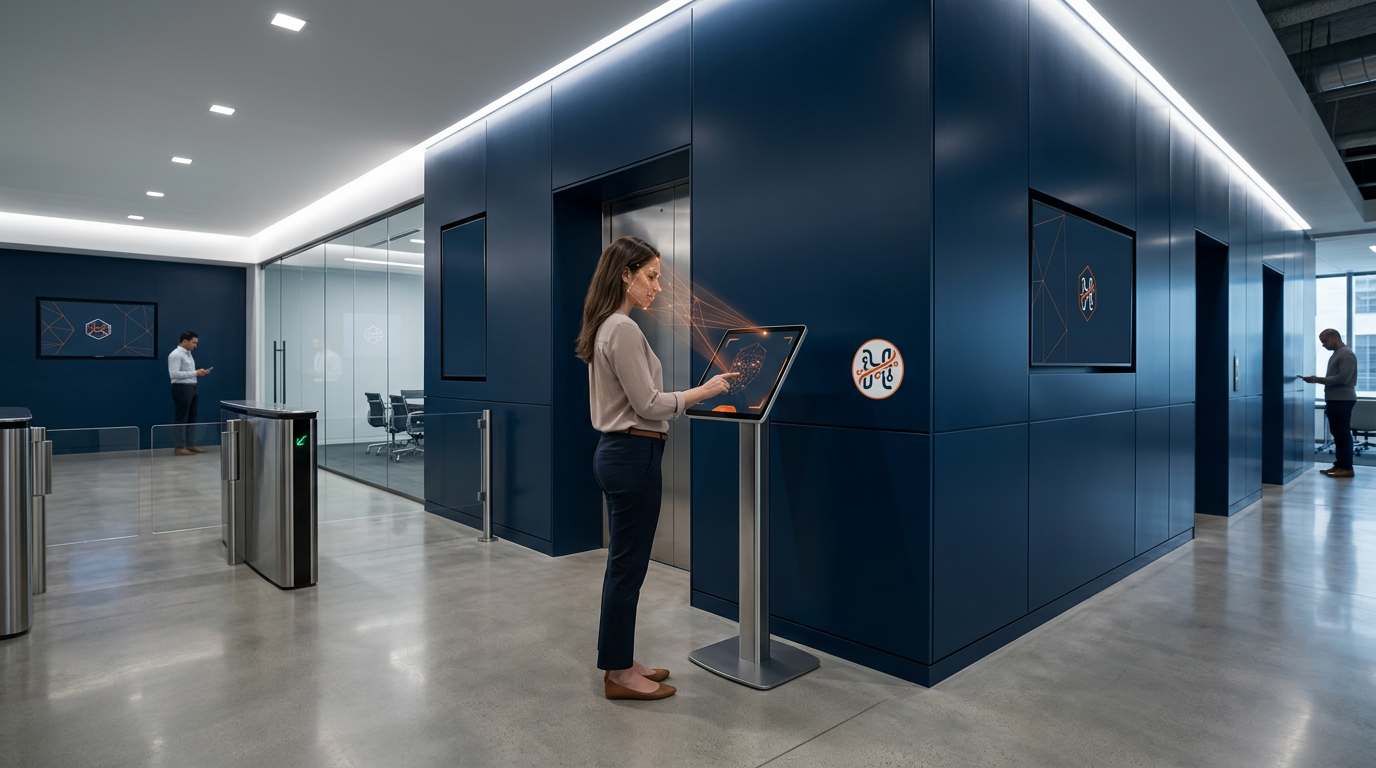
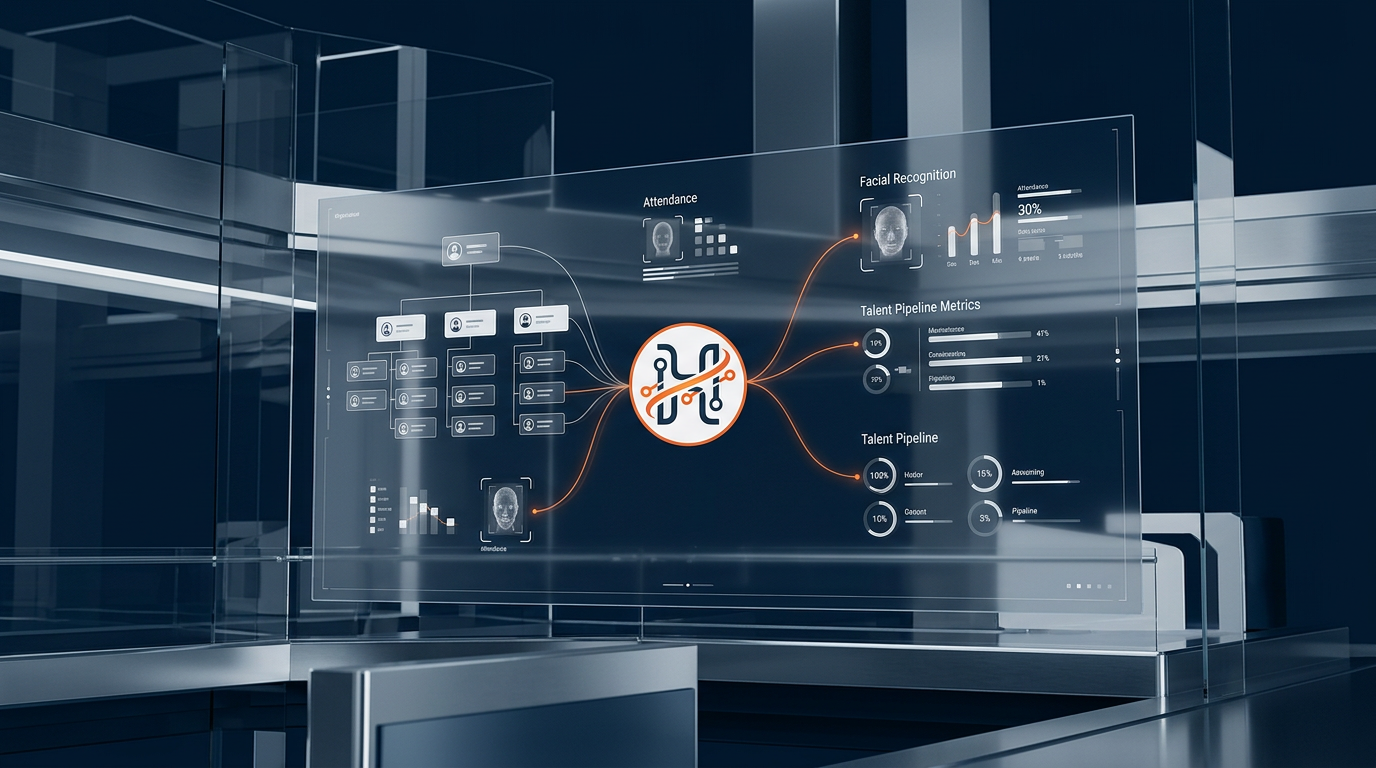
Rather than relying on legacy punch cards or manual sign-in sheets that HR must reconcile at month-end, modern workforce management software allows deskless and office staff to clock in independently. Through integrated mobile options—including GPS-verified geofencing, QR code scanning, and facial recognition attendance—employees log their working hours directly. Within their personal portal, staff can review timesheets, verify logged hours, and identify discrepancies before payroll processing begins.
2. Autonomous Leave and Absence Management
Leave administration is historically one of the most time-consuming HR tasks. In an automated self-service workspace, employees view their real-time leave balances, check team calendars for potential schedule conflicts, and submit vacation or sick leave requests directly. Built-in conflict detection flags overlapping absences immediately, routing approvals to line managers without HR intervention.
3. On-Demand Payslips and Compensation Records
Payday frequently triggers a surge of inquiries regarding deductions, tax withholdings, and net salary breakdowns. Self-service portals grant workers on-demand access to digital payslips, historical compensation statements, and end-of-service gratuity estimates. This transparency eliminates routine payroll queries while securing sensitive financial data behind role-based access controls.
4. Automated HR Letters and Official Requests
Drafting standard employment verification letters, bank account opening requests, or embassy no-objection certificates (NOCs) typically ties up HR staff. Intelligent platforms incorporate template-based generation and AI letter drafting directly into the self-service layer. Employees select the document type, the system populates verified profile data, and the request completes in minutes.
5. Document Management and Expiry Tracking
Managing identity records—such as passports, national IDs, driving licenses, and work permits—often devolves into chaotic spreadsheet tracking. Through self-service profiles, employees securely upload renewed documents themselves. The system leverages AI document intelligence to extract validity periods and alert both the worker and HR before documents expire, avoiding compliance violations.
6. Continuous Performance Reviews and 1-on-1s
Performance management fails when it relies on once-a-year paper reviews. Modern portals integrate goal setting, peer feedback, self-evaluations, and structured one-on-one agendas directly into the employee dashboard. Both managers and individual contributors maintain alignment throughout the quarter without HR needing to chase review submissions manually.
7. Instant Company Notifications and Policy Updates
Critical operational notices, company-wide announcements, and policy revisions no longer get lost in overflowing email inboxes. A centralized self-service workspace presents pinned notices, policy acknowledgments, and operational updates in an accessible feed, establishing a clear audit trail for operational leadership.
Traditional HR Service Delivery vs. Modern Employee Self-Service
The contrast between legacy, manual people operations and an automated self-service framework is stark across speed, data accuracy, and resource utilization:
| Operational Area | Legacy HR Operations | Modern Employee Self-Service | Business Impact |
|---|---|---|---|
| Leave Requests | Email chains, paper forms, manual balance calculation | Real-time balance lookup, automated conflict checks, instant routing | Zero HR intervention required for standard approvals |
| Attendance Tracking | Manual timesheet data entry, paper logs | Geofenced GPS, QR codes, or facial recognition verification | Eliminates manual reconciliation and time theft |
| Payslip Access | Physical distribution or manual email dispatches | Encrypted, 24/7 on-demand download via employee portal | Reduced payroll inquiries and enhanced data privacy |
| Document Verification | HR chases staff for passport/visa renewals via email | Direct employee uploads with automated expiry warnings | Prevents expired compliance records and legal penalties |
| HR Letters & NOCs | Manually drafted by HR staff in word processors | Self-service generation using AI-assisted dynamic templates | Document turnaround drops from days to seconds |
Scaling Across Borders: Multi-Company and Multi-Country Considerations
For growing mid-market enterprises, decentralizing routine HR tasks becomes essential when expanding into multiple entities or jurisdictions. Managing workforce requests across borders introduces regulatory complexity; an employee in Dubai requires automated UAE WPS compliance and specific gratuity workflows, while a team member in Riyadh or London follows distinct statutory leave entitlements.
Unified systems solve this by enforcing regional compliance rules in the background while keeping the front-end user experience uniform. Whether viewing statutory deductions, submitting local holiday requests, or generating standardized employment documents, employees interact with a clear, localized interface. Operations leaders can explore tailored software options on our pricing page to see how multi-entity architectures scale efficiently.
The Strategic Payoff: Shifting from Administration to People Strategy
Adopting employee self-service HR software is not merely an exercise in software digitization; it is an organizational realignment. When frontline staff independently manage administrative transactions, people operations teams recover hours of working time every week.
This reclaimed operational capacity allows HR leaders to redirect attention toward:
- Analyzing workforce retention indicators and company health metrics.
- Developing proactive talent acquisition pipelines using AI recruitment tools.
- Implementing employee engagement, coaching, and career pathing frameworks.
- Optimizing shift patterns and labor costs across complex operational environments.
By democratizing access to routine data, organizations build a culture of accountability and transparency while dramatically lowering overhead costs.
Transform Your Workforce Operations with HR Suite
Manual administrative friction should never hold your organization back. HR Suite by Smart Chain combines smart attendance tracking, leave management, automated payroll, AI-assisted recruitment, and a comprehensive employee self-service workspace into one unified platform.
Empower your team with instant access to their documents, attendance, and leave—while freeing your HR department to drive business growth.
Start your 14-day free trial today and discover how intelligent workforce management transforms your operations, or contact our solution team for a tailored walkthrough.
Ready to eliminate routine admin requests? Start your 14-day free trial with HR Suite by Smart Chain today and give your team a smarter, autonomous workspace.
Frequently asked questions
What is employee self-service HR software?
Employee self-service (ESS) HR software is a digital platform or module that allows employees to handle daily HR-related administrative tasks independently. This includes clocking in and out, viewing attendance, applying for leave, accessing payslips, requesting official letters, and updating personal records without directly contacting HR staff.
How does self-service software improve HR data accuracy?
By enabling employees to input and update their own personal information, banking details, and renewed identity documents directly, data entry errors by intermediary HR staff are eliminated. Automated verification rules and AI-assisted document parsing ensure validity before records enter the core HRMS.
Can field and deskless workers use an employee self-service portal?
Yes. Modern platforms like HR Suite provide responsive web and mobile access equipped with GPS geofencing, QR code scanning, and facial recognition. This allows field, retail, and logistics personnel to log attendance, check schedules, and submit leave requests directly from their mobile devices.
Does self-service software compromise confidential payroll information?
No. Enterprise self-service systems employ strict role-based access control (RBAC), multi-factor authentication, and end-to-end data encryption. Employees can only access their own confidential records, documents, and compensation statements.